

There are some jobs around the house that take five minutes to do but six months to get started.
I know because I’ve done it myself.
You notice the smoke detector and think, I should probably test that. You remember the gutters need cleaning before the next heavy rain. The air conditioner has been running almost nonstop through the summer, and you wonder if there’s anything you should be checking. None of these thoughts are urgent, so they get pushed to tomorrow. Before you know it, tomorrow has turned into next month.
I don’t think procrastination is always about avoiding work. More often, I think it’s about uncertainty. We hesitate because we’re not quite sure what we’re looking at, or we’re worried that once we start, we’ll discover something bigger than we expected.
Over the years, I’ve found that confidence doesn’t usually arrive before you begin. It grows as you begin to understand.
The Confidence Gap Isn’t About Ability
One of the things I enjoyed most about my years as a Provincial Investigator was learning how to separate facts from assumptions. If something looked unusual, I didn’t jump straight to conclusions. I gathered information, looked at the evidence, and tried to understand what I was seeing before deciding what needed to happen next.
Without really thinking about it, that’s how I’ve come to approach homes as well.
A house isn’t trying to confuse you. It isn’t hiding secrets behind the drywall or making life difficult on purpose. Every system has a job to do, whether it’s keeping you comfortable, moving water away from the foundation, or alerting you if something isn’t safe. Once you understand what that job is, it’s much easier to tell the difference between something that deserves your attention today and something that can wait until the weekend.
I think that’s where many homeowners get stuck. They believe they need to know how to fix everything before they can feel confident. In reality, understanding what’s happening is usually the first—and most important—step.
Homes Speak Plain Language
Take your cooling system, for example.
Whether your home has central air, a window air conditioner, a ductless mini-split, or simply ceiling fans helping move the air around, the goal is the same: keeping your home comfortable during the warmer months. Many people are surprised to learn that a ceiling fan doesn’t actually lower the temperature in a room. It simply helps you feel cooler by moving the air. It’s a small detail, but it’s one of those pieces of knowledge that helps your home make a little more sense.
The same goes for smoke and carbon monoxide detectors. Most days we don’t think about them because nothing is happening. That’s exactly how we want it. Their quiet presence is easy to take for granted, yet they’re among the most important safety systems in any home. Carbon monoxide is often called the silent killer because it’s odourless and colourless. Understanding that fact isn’t meant to create fear—it’s meant to remind us why these detectors deserve our attention.
Even something as ordinary as a gutter has a straightforward purpose. It collects rainwater and directs it away from your home’s foundation. When gutters become clogged, water doesn’t always end up where it’s supposed to, which is one reason they’re a leading cause of basement leaks. Knowing what a gutter is supposed to do makes it much easier to recognize why routine maintenance matters.
None of these systems are asking you to become an expert. They’re simply asking you to become familiar with your home.
Familiarity Changes Everything
I’ve always believed that confidence comes from familiarity.
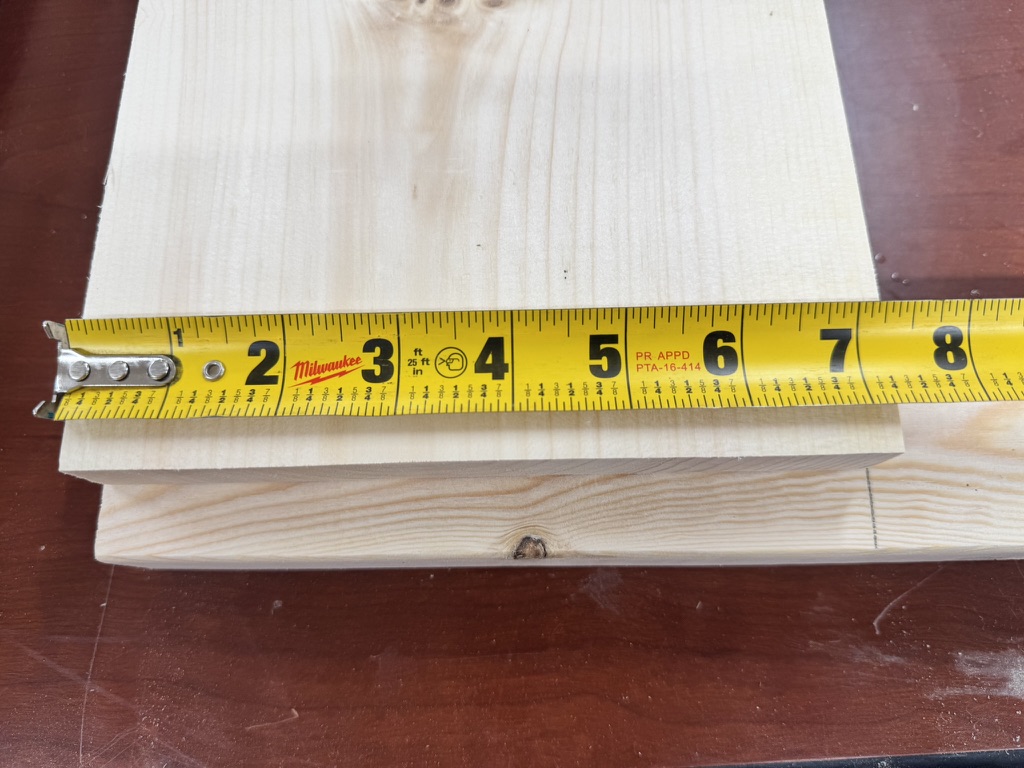
The first time you walk into the lumber aisle, every board can look exactly the same. Then someone mentions that a 1×8 doesn’t actually measure one inch by eight inches—it measures 3/4 by 7 1/4 inches—and suddenly you realize there are reasons behind the things that once seemed confusing.
The same thing happens with tools.
A utility knife is one of the simplest and most useful tools you’ll own. It’s there for everyday jobs like opening boxes, trimming materials, cutting rope, replacing a screen, or making small adjustments around the house. A grinder, on the other hand, is built for completely different work, such as cutting metal, sharpening blades, or removing rust. It operates at very high speeds and deserves the respect that comes with any powerful tool.
Then there are tools you’ll probably hear about long before you ever use them. A jointer is one of those. Its job is to flatten one face of a rough board and square one edge before the wood is joined with another piece. You may never own one, and that’s perfectly fine. But understanding what it does makes woodworking feel a little less mysterious.
Every time you learn one new thing—whether it’s about a tool, a material, or one of your home’s systems—you take away a little of the uncertainty that kept you from getting started in the first place.
Nobody Handed Us the Manual
One of the saddest things I hear is, “I should already know this.”
No, you shouldn’t.
Most of us weren’t raised learning how cooling systems work, why gutters matter, or what a carbon monoxide detector actually does. We bought homes, inherited homes, or rented homes, and somewhere along the way we started believing we were supposed to understand everything that came with them.
That’s an unfair expectation.
The women I meet aren’t lacking in ability. They’re lacking opportunity. No one took the time to explain these things in plain language, without judgment or making them feel like they should have known already.
That’s why I care so much about homeowner education. My goal has never been to turn everyone into a handywoman. It’s to help women feel comfortable asking questions, understanding what they’re seeing, and making thoughtful decisions instead of fearful ones.
When you understand your home, you stop seeing it as something that can catch you off guard. It becomes a place you know a little better every month.
Your Next Step
If you’ve ever wished someone could walk through your home and explain things without the jargon or the pressure, that’s exactly what a Home Confidence Walkthrough is designed to do.
We’ll look at your home’s important systems together, talk about what’s normal, answer your questions, and help you feel more comfortable making decisions about your home. My goal isn’t to tell you what to do. It’s to help you understand enough that your next step feels clear.
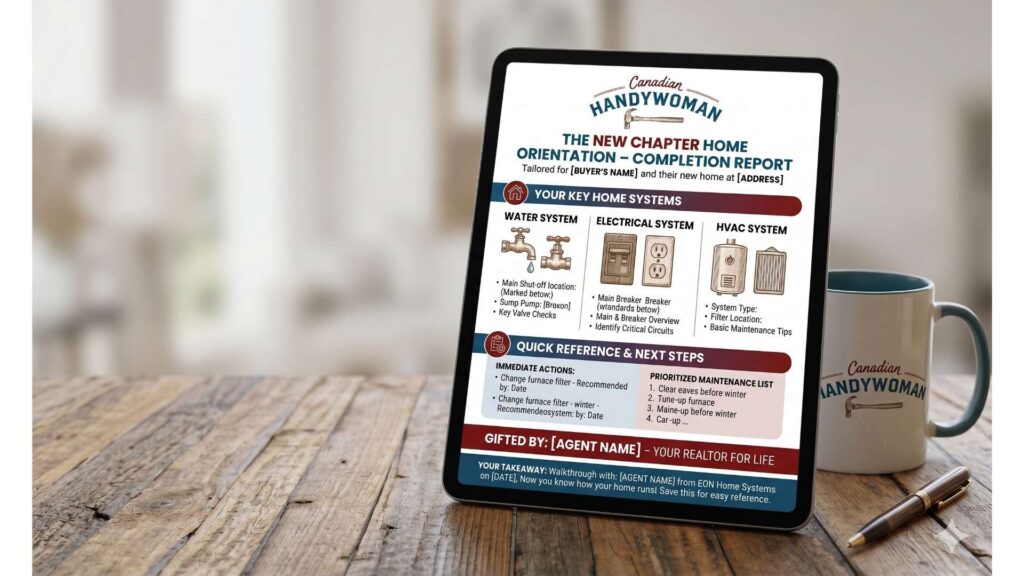
Ready to keep building your confidence? Join one of my upcoming Hands-On Signature Workshops or download my Smart Homeowner Checklist and keep learning one step at a time.
Cheers,
Tammy